This is a recording of an event that took place on January 7, 2026.
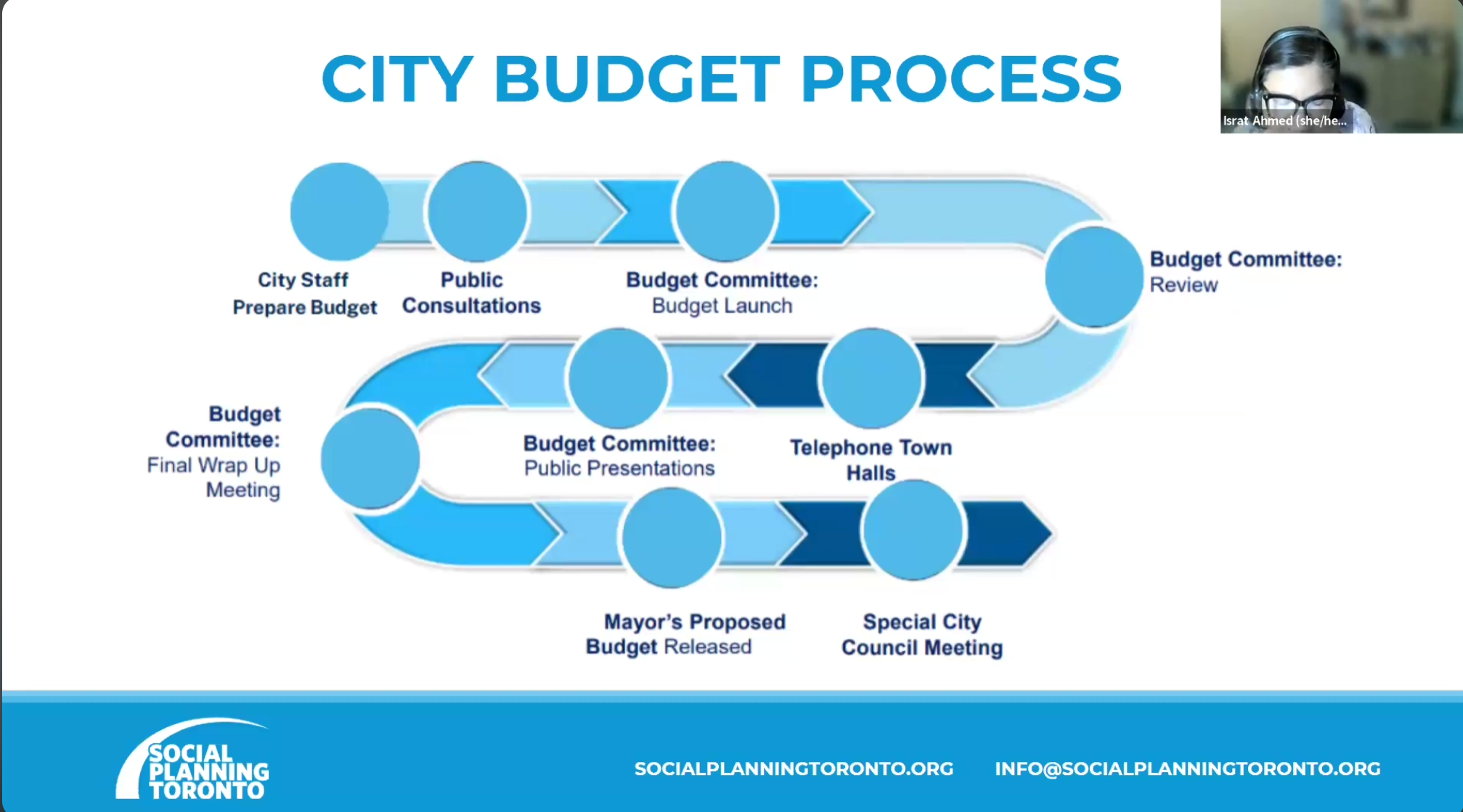
Social Planning Toronto’s Budget 101 workshop provides an overview of the City of Toronto's budget process and the importance of community engagement. Senior Researcher Beth Wilson and Senior Community Planner Israt Ahmed share their expertise and answer questions about the City's Budget, moderated by Executive Director Jin Huh. Access all of SPT’s budget resources.
Access a copy of the presentation deck.
The workshop was followed by an extended question and answer period with members of the community. Out of respect for the privacy of participants, we have omitted this section from the recording. The following is a high-level summary of what was discussed.
What is the difference between telephone town halls and a deputation?
There are multiple ways to get involved with the budget process. Town halls happen mainly with members of City staff (though Budget Committee members may be present). The feedback from the town halls are then collated into a report that is presented to Council. Deputations are heard directly by the Budget Committee members; they will hear everything you say, rather than receiving a summary.
How can I make sure that my lived experiences with homelessness (and other experiences) are heard by City Council?
It is extremely important that City Council listens to those with lived experience, particularly in areas that will be directly affected by budget decisions. And they appreciate hearing from lived experts. Your personal stories are powerful. Consider making a deputation to the Budget Committee to share your experiences and to highlight what budget investments would be meaningful to you.
Social Planning Toronto will be hosting two virtual budget engagement/deputation training workshops: Deputations 101 (January 14, 7 - 9 p.m.) and Housing Advocacy Workshop (January 16, 10 a.m. - 12 p.m.). These workshops will support you in shaping clear key messages and concrete budget requests, and share practical tips for delivering confident and impactful deputations. Our Budget Town Hall (January 19, 2 - 4 p.m.) will provide just-in-time analysis from SPT and community partners that can be used to support your deputations.
Public deputations will take place on January 20 and 21. More details will be posted on our City Budget Resources page as they become available.
How can I get involved as a new immigrant/permanent resident?
There is no restriction for any newcomers and permanent residents when participating in the City Budget process. You can make a deputation, participate in a town hall, and join a collective action (such as adding your voice to a joint statement, letter writing campaign, rally). Look up community groups who are already organizing around the City Budget to learn more about how you can support their work; Social Planning Toronto’s events and City Budget Resources are good places to start.
Many settlement services and immigration programs fall under federal (rather than municipal) jurisdictions; however, there is still a lot that the City of Toronto can do to make life affordable and liveable for all residents (e.g. you can talk about affordable housing, city services like libraries and recreation programs, and childcare, and more). It’s important that they hear from Torontonians from different backgrounds and immigration statuses.
There are a lot of links between the housing and homelessness crisis, and mental health services in the City. How can the City Budget address this, and how can we better educate?
In our Talking About Homelessness messaging guide we draw attention to the link between homelessness and mental health, specifically challenging the misconception that people become homeless due to their mental health (research shows that people are more likely to develop poor mental health conditions after experiencing housing insecurity).
We know that supportive housing can be a stabilizing force for many people, especially in managing substance use and mental health. Despite this, waitlists for supportive housing are long, with many people waiting for years. The Housing Secretariat is one of the City’s Development and Growth divisions responsible for working in partnership to deliver and maintain affordable housing, including helping people find and maintain housing. To learn more about actions the City can take to address homelessness (and to depute in support of these programs), we encourage you to attend our Housing Advocacy Workshop on January 16.
Most healthcare services are the jurisdiction of the province, but the City Budget can address some of the gaps. In recent years, the City has expanded the Toronto Community Crisis Service, though there are questions that need to be explored in how effective these programs have been at adequately meeting the needs of Toronto’s population. We encourage you to pay attention to the Toronto Public Health 2026 Operating Budget, which was submitted to the City in September.
How can we advocate for better community services in underserved parts of the City, like the northwest (Islington and Steeles area)?
We encourage you to continue to talk with your neighbours, communities, and existing neighbourhood organizations about the issues that you would like to see addressed. We acknowledge that a lot of work is already being done in the inner suburbs by community activists, advocates, and organizations. We must continue to work together to put pressure on Council to adequately serve all residents across Toronto. Talking about neighbourhood specific experiences, needs and recommendations—and specifically highlighting gaps in services in Scarborough and the northwest parts of the city—in your deputations or communications with City Councillors is always a great idea.