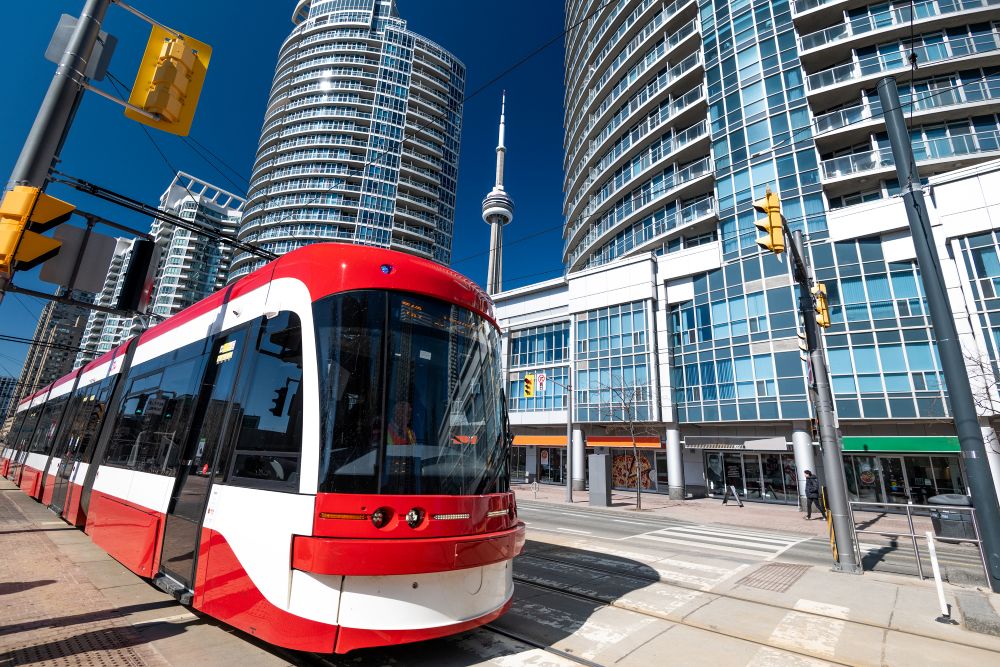
Ahead of City Council's February 10, 2026 meeting to determine the Toronto's 2026 City Budget, 78 community and faith-based organizations and 193 workers co-signed a letter to Mayor Chow and the members of Toronto City Council urging them to support key investments in affordable housing, transit, youth employment, poverty reduction, and more.
Read the full letter below. Join us tomorrow at City Hall for the Fund Our City Rally.
Dear Mayor Chow and Members of City Council,
We are writing to you as community-based nonprofit organizations, faith leaders, community advocates, grassroots groups, labour groups, and frontline workers that support hundreds of thousands of residents across Toronto with critical community services. At a time of rising costs and escalating need, the City Budget needs to safeguard and further advance critical programs and services.
The proposed investments in the 2026 Budget will help tenants to stay housed, ensure children across the city are fed, provide personal care services for seniors, make transit more affordable, expand mental health support in libraries and on transit, and fund essential community programs. We urge Council to protect the funding for the Rent Bank and RentSafeTO, the Student Nutrition Program, the Camp TO Nutrition Program, the continued implementation of Open Hours in libraries, the TTC fare freeze and fare capping, the air conditioner program for low-income residents, and the increased funding for arts, culture and community organizations. These commitments matter, and we call on City Council to fully fund them in the final budget. At the same time—as we all know—they are not enough to respond to the growing needs across the city.
We have been supporting more residents than ever as they face rising costs, unstable and low-wage work, limited childcare, climate instability, and a severe shortage of affordable housing and accessible shelter spaces. Many are working multiple jobs yet they are still forced to choose between rent and groceries, while youth struggle to access essential social and employment programs as funding declines. These pressures fall heaviest on communities already facing systemic barriers.
The City of Toronto has done a tremendous job filling in the gaps left behind by the provincial and federal government. As civil society organizations and staff across Toronto, we have also been doing what we can to join you in an all-city approach to address growing poverty, as a result of failures from other levels of government. Today, we are asking the Mayor and City Council to dig deeper and further strengthen the 2026 City Budget so we can all more effectively address the structural inequities that leave residents bearing the brunt of the affordability, health and climate crises. To that end, we’re asking City Council for the following:
-
Immediate investments of $1.1M in the drop-in sector to address chronic wage disparities and staffing challenges, along with the establishment of a multi-year strategy. This will support wage parity for workers and equip the sector to respond to the growing complexities and challenges facing drop-ins (e.g. growing numbers of unhoused individuals, negative impacts as a result of provincial closures of supervised consumption sites, mental health challenges, an aging population, and ongoing accessibility concerns). We recommend increased investments similar to what we have seen in the shelter sector, and a commitment to a multi-year strategy that aims to harmonize wages and equip the sector with the supports needed to serve its growing and complex needs. As costs for both City-funded and non-City funded drop-in programs have ballooned due to inflation, City Council can further support the sector by funding bulk purchases through the Toronto Drop-in Network to supply all drop-ins with essential items such as winter supplies.
-
Substantially increased investments in the Multi-Unit Residential Acquisition (MURA) program, and a commitment to including sustained funding for MURA in the 10-year Capital Plan to protect existing affordable housing. MURA is one of the most cost effective methods to secure affordable housing and with the current real estate downturn there is no better time to ramp up this program. We recommend topping up the $45 million MURA budget in 2026 so it exceeds the $102 million spent in the last call for proposals, and identifying ways to support the nonprofit and co-op housing sectors to scale up their activities, including in securing accessible units and preserving deeply affordable multi-tenant housing. Council can further support by actively identifying and removing any barriers from the City, and committing to this program over the next 10 years as part of the City’s long-term housing strategy and capital plan. If additional funding cannot be secured through the federal government, we are asking for a commitment to prioritizing finding additional funds within the City’s budget.
-
An augmentation to the $2.6 million increase to the Rent Bank, and increased funding by $2M for other tenant support programs: the Toronto Tenant Support Program (TTSP), the Eviction Prevention in the Community program (EPIC), and tenant supports tied to the implementation of the Multi-Tenant Housing (MTH) Framework and serving people with disabilities. Increased funding in these areas makes financial sense as they prevent homelessness. The TTSP provides legal support, multi-lingual tenant hotlines and tenant education and engagement. It was funded at $2.2 million in 2025 and could be significantly expanded in 2026, including with targeted and proactive outreach to MTH renters at risk of displacement and eviction. EPIC provides individualized case management services to prevent eviction. Currently funded with a base budget of $9.3 million, it could be further expanded to have greater impact, including through the use of innovative approaches and pilots.
-
A commitment that the key youth programs achieving positive impacts in violence prevention and employment are continued, including programs in Scarborough such as TO Wards Peace and the Family Well-Being Pilot Program. Federal funding through the Crime Prevention Action Fund (CPAF) and the Building Safer Communities Fund (BSCF) grants will expire on March 31, 2026, leaving a $6.2M gap in the 2026 City Budget for youth violence prevention programming. These programs offer life-saving support for thousands of youth and their families, preventing shootings and other incidents of youth violence. Last year, Toronto saw a 43% decrease in shootings and firearm-related incidents and a 35% reduction in youth shootings and firearm-related violence. Continuing to offer life-saving and life-changing supports are critical to ensure that this reduction in violence can be sustained.
-
A clear plan to address significant gaps in disability access and inclusion in the provision of city services. People with disabilities continue to experience some of the greatest barriers to affordable housing and shelter, due to lack of accessible units and shelter spaces. We call on City Council to fully commit to implementing the Council-approved goal of 100% universal design in all new housing units to ensure new affordable housing is fully inclusive. Council also needs to fund a detailed assessment of barriers to accessibility in the shelter system and ensure that 50% of newly built shelter spaces meet universal design standards by 2033. We also see the need for stronger reporting and transparency on disability inclusion in the budget, including an annual briefing note that details all of the investments and activities that the City is undertaking to address access and inclusion for disabled residents, accompanied by the inclusion of adequate funding across city services funded in the budget (e.g. shelters, tenant supports, MURA, drop-ins, etc.), with dedicated budget lines.
Improving the efficiency of our emergency response systems creates an opportunity to redirect funds toward the community and social programs that deliver positive and meaningful outcomes for residents. To support this shift we recommend that City Council implement the Auditor General’s recommendations, particularly those that expand alternative response models. The Auditor General found that TPS is routinely dispatched to six types of events that do not require a police response (address checks, well-being checks, disputes, noisy parties, landlord- tenant disputes, and unwanted guests). Building on the strong foundation of the Toronto Community Crisis Service (TCCS), responses to these events could be handled by trained civilian responders. Shifting responsibility in this way could free up police hours—allowing those resources to be redirected toward more cost-effective community and social programs and services.
As we look towards future budgets, we encourage City Council to continue investing in key strategies that address systemic inequities and strengthen service systems, including ongoing improvements in services for the unhoused, the Confronting Anti-Black Racism Strategy, the Indigenous Prosperity Action Plan, the Disability Inclusion Action Plan, the Child Care Growth Strategy, and the Inclusive Economic Development Framework. As the country faces economic uncertainty, supporting Community Wealth Building initiatives and investing in new childcare spaces where they’re most needed, will further strengthen local economies and communities. City Council must also recommit to realizing the 90% occupancy standard for emergency shelters so that no one is turned away from shelter, especially during the freezing cold.
We recognize the significant investments that Toronto City Council has made in recent years to build a more livable, equitable, and sustainable city. We also acknowledge the budget pressures created or exacerbated by senior orders of government. The community services sector will continue to advocate alongside the City for fair funding and meaningful policy change.
While this year’s budget includes important targeted investments, it can go farther in addressing the multiple crises and hardships many Toronto residents are experiencing today. We urge the Mayor and Council to fund the key enhancements outlined in this letter. These modest proposals are imperative to supporting the wellbeing of all residents and will help to ensure Toronto is a city for all.
Signatories
Organizations
Access Alliance
ACSA Community Services
Anglican Diocese of Toronto Social Justice & Advocacy Committee
Ansaar Foundation
Bangladeshi-Canadian Community Services
Bread and Bricks Social Justice Group of Davenport Perth Community Ministry
Canadian Centre for Victims of Torture
Centre for Immigrant and Community Services
Centre for Independent Living in Toronto (CILT)
Chinese Canadian National Council Toronto Chapter
Chinese Community in Scarborough
College-Montrose Children's Place
Davenport Perth Neighbourhood & Community Health Centre
Department of Imaginary Affairs
Dixon Hall
Don Valley Community Legal Services
Ecuhome Corporation
Evangel Hall Mission
Fife House Foundation
Fontbonne Ministries
Fred Victor
GOOD TO BE GOOD
GTA Disability Coalition
House of Compassion of Toronto
Madison Community Services
Margaret's Housing And Community Support Services
Oakwood Vaughan Community Organization
One Love Family Services
Ontario Homeopathic Medical Association
Operation Springboard
Parkdale Activity Recreation Center
Policing-Free Schools
Parkdale Queen West Community Health Centre
Progress Place
Red Apple Day Care (Overlea)
Red Door Family Shelter
Reena INC
Retired Executives for Social Equity (RESE)
Sanctuary Ministries of Toronto
Scadding Court Community Centre
Scarborough Centre for Healthy Communities (SCHC)
Seniors for Climate Action Now! Toronto Chapter
Settlement Assistance & Family Support Services (SAFSS)
Social Planning Toronto
South Asian Women's & Immigrant's Services Inc
St Felix Centre
Street Haven
Studio 123 Early Learning Centre
The Jean Tweed Centre
The Laneway Project
The Neighbourhood Group Community Services
The Toronto (Mental Health & Addictions) Supportive Housing Network
The Yonge Street Mission
Toronto & York Region Labour Council
Toronto ACORN
Toronto Alliance to End Homelessness
Toronto Community Benefits Network
Toronto Community for Better Child Care
Toronto Drop-In Network
Toronto Neighbourhood Centres
Toronto Shelter Network
Treetop Children's Centre
TTCriders
Volunteer Toronto
Warden Woods Community Centre
Weston King Neighbourhood Centre
Working Women Community Centre
YWCA Toronto
Individuals
Adrian Cocking
Ainsley Chapman
Alejandra Ruiz Vargas
Alex Hernandez
Alfred Lam
Aliyah Campbell
Alura Moores
Amanda kinna
Amena Rajwani
Amy O'Neil
Andrea Paszti
Andrea Vásquez Jiménez
Andrew Pulsifer
Andriana Bidiak
Anna Borges
Anna Fitzpatrick
Anna Stranges
Anne Thomson
Anthony Michael Stillo
Anya Goss
Arami Galeano
Barbara Domenech
Barbara Mangwende
Bea Marie
Beatriz Alas
Belinda Marchese
Beth Wilson
Beverley Galandzy
Bill Sinclair
Bonnie Hunter
Brian Harris
Brian Joe
Brian Passmore
Bryan Douthwright
Carol Thames
Carolyn MacLeod
Casey
Chama Chongo
Char San Pedro
Christina Habal
Christopher Friesen
Cliff Ledwos
Corina John
Daniele Goldfinger
Danielle Smith
David Meyers
Dennis John Chadbourne
Diana Chan McNally
Dobrila Tomic
Don Young
Donna Spreitzer
Earl Smith
Ejikeme Ehirim
Eleanor Yang
Eleisha Morgan
Elyse Wilson
Emma King
Erika Hoseini
Fateha Hossain
Feite Kraay
Francois Sealy
Gabriel Ermatinger
Gabrielle Langlois
Gael Gilbert
Gavin Bowerman
George Wheeler
Habeeb Alli
Harmony Adzido
Helen Armstrong
Helen Gill
Herman Ellis Jr
Husna Sweet
Ijaabo Mohamed
Imam Dr. Abdul Hai Patel
Israt Ahmed
Jack Copple
Jade Medwedyk
James Maroosis
James Willis
Jasmin Dooh
Jeanie Argiropoulos
Jeanne-Monique Frank
Jenn Chan
Jennifer Bae
Jenny Casarella
Jessica Rizzo
Jessica Singh
Jhuma Rani Paul
Jin Huh
Joanne McKiernan
Joey Edwardh, PhD
John Campey
John Mossa
Joseph Schuchert
Joyce Deonaraine
Judy Tsao
Kalie Tulan
Kanaka Kulendran
Kate Atkinson
Kate Bird
Kathryn Firth
Keith Hambly
Kelly McClure
Kemba Robinson
Kim Adlard
Kira Heineck, Executive Director
Klementina Fejzulla
Krista Fry
Kumsa Baker
Laura Anonen
Laura Macdougall
Leah Katerberg
Leah Penttila
Lee Soda
Leslie Gash
Leya Choudhury
Lidia Monaco
Lorraine Lam
Lynne Raskin
Manny Wong
Marcia Sharp
Marcia Stone
Marco Campana
Maria Christina Conlon
Maria Dasoo
Maria Tucker
Maritza Sanchez
Marva Burnett
Mary Kopman
Mary Micallef
Melanie Joy
Melanie Nielsen
Melanie Seabrook
Melissa Goldstein
Melissa Wong
Mercedes Sharpe-Zayas
Michael Esposti
michael kerr
Mina Mawani
Minakshi Das
Motunrayo Situ
Mulugeta Abai
Nasima Akter
Nat Maure
Neena Locke
Paul Kang
Peter Clutterbuck
Ping Gu
Rabbi Aaron Rotenberg
Rawan AbuMahady
Rebecca Jess
Rejwan Karim
Rev. Bob Paterson-Watt
Rev. Dale Henry
Rev. Ma. Christina Conlon
Rica Kristel Piccio
Robin Masterson
Romana Huq
Ryan Friedman
Ryan Tucker
Sami Pritchard
Sarah Luca
Sarah Thorne
Serena Datta
Shannon Spencer
Sharma Queiser
Sharon Anderson
Sharon Zeiler
Shelly Gordon
Shennel Simpson
Sheryl Lindsay
Sina
Sree Nallamothu
Stacey Semple
Stacia Stewart
Steve Lurie
Sudip Minhas
Suganthine Sundaralingam
Sultana Jahangir
Sultana Yasmin
Susan Fletcher
Susan Prasad
Tab Enta
Tammy Decarie
Tara-Lynn Williamson
Taryn Allen
Tina Garnett
Tokunbo Awe
Toshio U.-P.
Vanda Henriques
Victor Willis
Victoria Okazawa
Zainab Imam