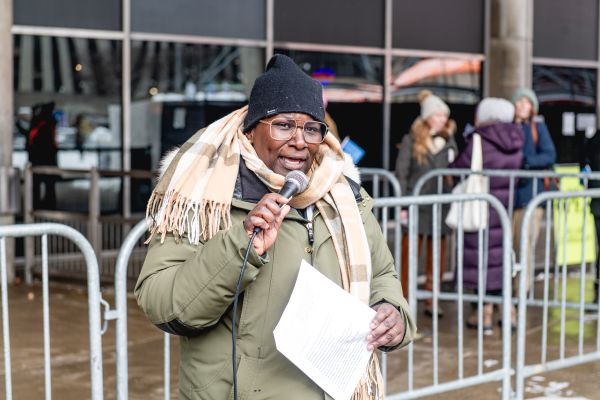
Earlier this month, the Province of Ontario announced they would cut funding to seven supervised consumption sites (SCS) across the province, including two in Toronto, forcing their closure. This follows the additional closure of 10 supervised consumption sites in 2025, half of which were located in Toronto.
This move is purportedly intended to make communities safer, but it ignores the readily-available evidence that proves SCS are an essential harm reduction measure. SPT provided a detailed analysis on how SCS provide necessary, lifesaving care, and how shutting them down will have deadly consequences. Between March 2020 and May 2024, trained workers at SCS in Ontario medically-intervened to prevent almost 22,000 overdose deaths. Last month, we published an op-ed in the Toronto Star (in partnership with The Neighbourhood Group Community Services) highlighting research that found crime rates in areas immediately surrounding SCS remained stable or declined following their implementation.
Ten days after the announcement to shut down SCS, Ontario released its 2026 Budget. The Advocacy Centre for Tenants Ontario criticized the budget’s housing initiatives that prioritize investors over tenants amidst a growing housing affordability crisis. The Canadian Centre for Policy Alternatives says this budget “fails to address the underfunding of health care, K-12 education, post-secondary education, community and social services, and rental and social housing.” (Read SPT’s pre-budget submission to the Province.)
The decision to eliminate funding for an essential public health program like supervised consumption sites, combined with no plan to sufficiently fund healthcare and affordable housing, will result in entirely preventable deaths.
There is still time to act. The Harm Reduction Advocacy Collective (HRAC) has created an e-mail tool you can use to demand the Province restore funding to SCS. A rally will be held on Wednesday, April 1 from 12-2 p.m outside the Chief Medical Officer of Health’s offices at 393 University Ave.
In this issue:
- Read Our Report on Community Wealth Building
- Join SPT’s Board of Directors
- SPT Interviewed for Met Radio About the 2026 City Budget
- Child Poverty Rates Across Canada Rise for Third Consecutive Year
- New Study Finds Financialized Landlords Target Black Renters
- Have Your Say: Tell the Canadian Government What the 2026 Budget Should Prioritize
Read Our Report on Community Wealth Building
SPT is proud to announce a new report co-authored with Evenings and Weekends Consulting in collaboration with the City of Toronto and the Atkinson Foundation that looks at Community Wealth Building (CWB) initiatives in Toronto from 2014 to 2024. CWB is a transformative economic development model that promotes democratic control and community ownership of local assets through five key pillars: Progressive Procurement, Locally Rooted Finance, Inclusive and Democratic Enterprise, Fair Work, and Just Use of Land and Property. The report offers takeaways that aim to inform future municipal and institutional CWB strategies, as well as strengthen the community-based movement for economic democracy.
To learn more about upcoming CWB opportunities in Toronto, follow the release of the inaugural Inclusive Economic Development Framework at the Economic and Community Development Committee on Thursday, April 9. Applications for the City’s new Community Economic Development Fund are open until April 23, 2026.
Join SPT’s Board of Directors
SPT is currently seeking 2 volunteers to join our 10-member volunteer Board of Directors who are committed to working towards social and economic justice, a more equitable Toronto, and the mission and values of the organization. The candidates ideally have lived experience of racialization, racism and/or other forms of social and economic marginalization as well as one or more of the following areas of expertise:
- Governance and non-profit management experience
- Non-profit financial planning and fundraising experience
Applications close May 3, 2026. To learn more about what this role entails and how to apply, please visit our website.
SPT Interviewed for Met Radio About the 2026 City Budget
On February 10, as City Council voted on the final 2026 Budget, over 200 Torontonians rallied outside City Hall calling on deeper investments in vital community services and programs. The Fund Our City Rally was organized by SPT and endorsed by over 14 non-profits organizations and unions. Representatives from SPT and our community partners were interviewed for TMU’s Met Radio.
The final 2026 City Budget invests $30.445 million in new and enhanced programs and services. Read our full analysis.
Photo by Razeeb Chowdhury.
Child Poverty Rates Across Canada Rise for Third Consecutive Year
The 2025 Report Card on Child and Family Poverty in Canada, released by Campaign 2000, draws on the latest national data to examine the state of child and family poverty across the country. The report found that 802,000 children live in poverty using Canada’s official measure, and nearly 1.4 million children live in poverty using a broader income measure. At the current pace, it would take almost 400 years to end child poverty in Canada.
For Toronto-specific numbers, see Social Planning Toronto’s Child and Family Poverty Report Card published in 2024. An updated report will be published later this spring.
New Study Finds Financialized Landlords Target Black Renters
A new study published by Nemoy Lewis, Dimitri Panou, and Richard Maaranen found financialized landlords are filing eviction notices at almost five times the average rate in Toronto’s predominantly Black communities. Landlords in working-class neighborhoods have been harassing tenants or deferring maintenance to force renters from their homes, a process that has been labelled “racial banishment.” Read an interview with the report authors in the Breach.
Have Your Say: Tell the Canadian Government What the 2026 Budget Should Prioritize
The Standing Committee on Finance has launched its consultations process in advance of the 2026 federal Budget. This Budget will impact how much will be spent on housing and social programs, national infrastructure, sustainable technologies, and more. Written submissions are open until Thursday, April 30, 2026.