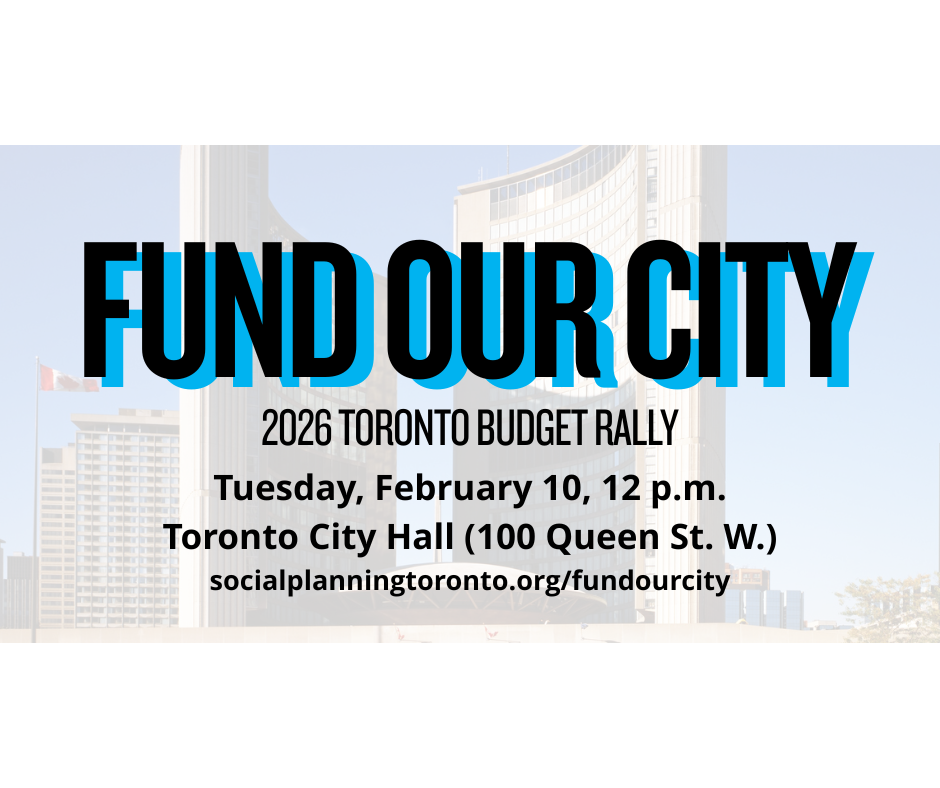
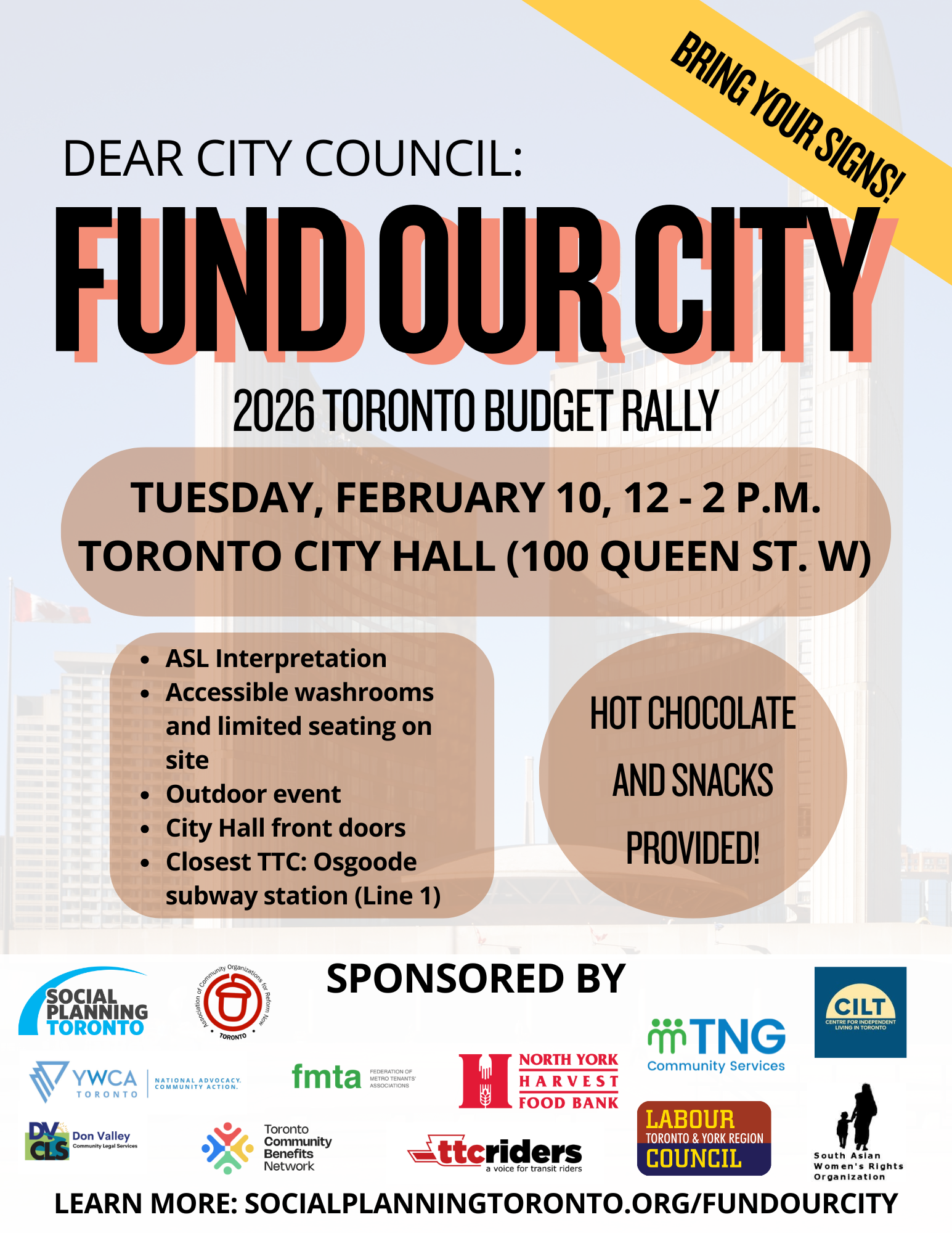
On February 10, Toronto City Council will be voting on the 2026 City Budget. Social Planning Toronto and partners are organizing a community rally outside City Hall to let Council know this is no time for cuts.
This year's proposed budget strengthens vital community programs and services, including increased tenant supports, extended library hours, and TTC fare capping. Still, key areas require deeper investment and faster action, particularly on affordability measures. We are asking City Council to build on this progress and commit to fully funding critical programs and services that people rely on. It's time to send a strong message: we need to fund a city where everyone can thrive.
To better understand what’s in this year’s proposed budget, SPT has continued our annual tradition of providing key insights over at our City Budget Watch blog. We analyzed the staff-proposed budget, reviewed the Budget Committee’s recommendations, and recapped what we heard during public deputations. We compiled our key budget priorities, informed by conversations with our budget coalition of over 150 community and grassroots organizations. We have provided deep dives on what the City Budget means for TTC riders, the Toronto Police Service, the Student Nutrition Program, and nonprofit community services and community-based arts and culture programs. And we’ve distributed recordings of our recent online events, including our Housing Advocacy Workshop, Budget Town Hall, and Budget 101 Workshop.
Our work is not done. The best way to stay informed on all things budget is by signing up for our City Budget Watch newsletter, and by checking out our City Budget resources page, updated regularly. In the coming days, we will be looking at the Mayor’s budget, which will be released before February 1st.
Budget decisions shape the quality of life of residents and communities across the City throughout the year. Together, we can make our voices heard. See you on February 10.
In this issue:
- Caring About Care Workers in the News
- Take Action: Participate in the 2026 Ontario Pre-Budget Consultations
- Statistics Canada Layoffs Will Impact Essential Research and Reporting
Caring About Care Workers in the News
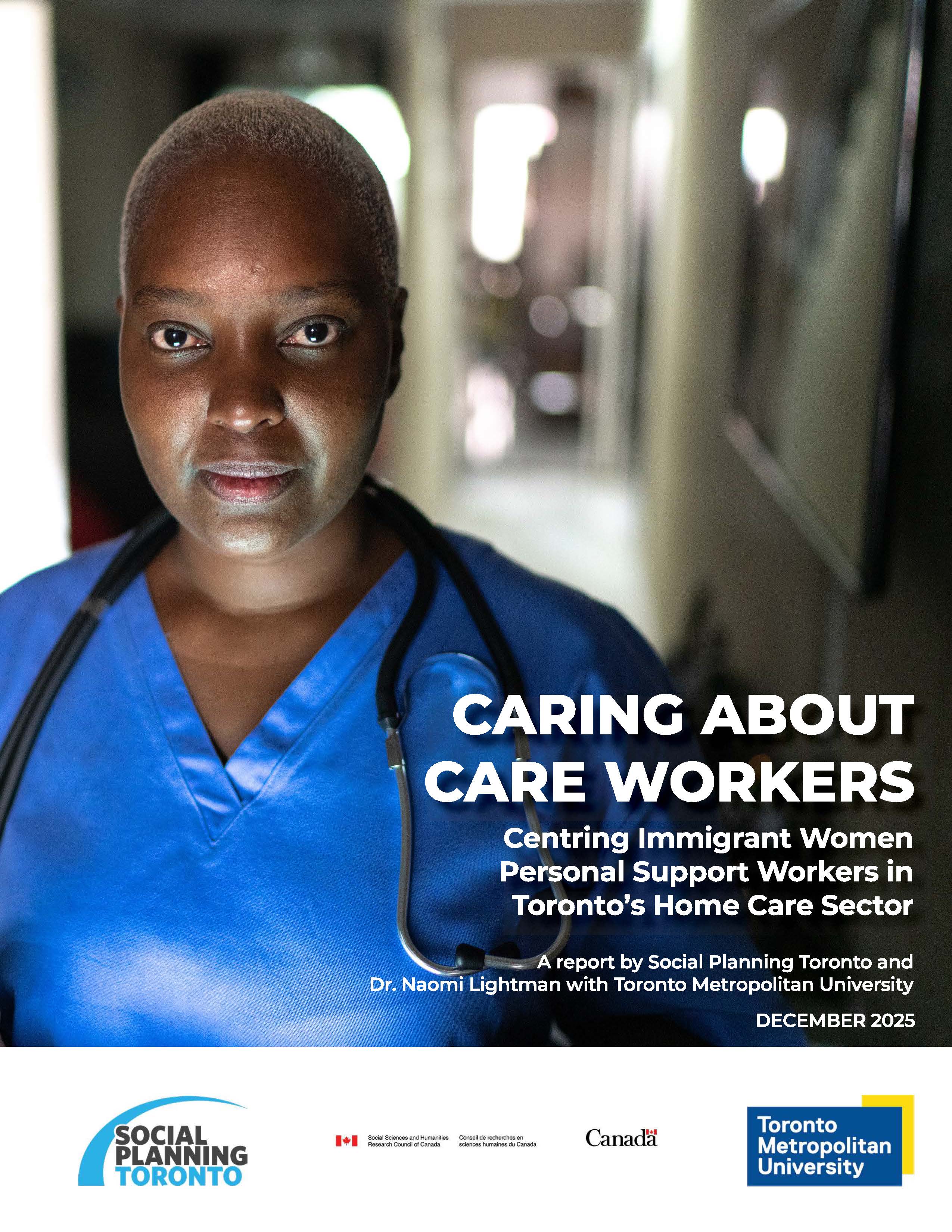
Last December, Social Planning Toronto and Dr. Naomi Lightman of TMU published Caring about Care Workers: Centring Immigrant Women Personal Support Workers in Toronto’s Home Care Sector. In this research study, interviews were conducted with 25 immigrant women working as personal support workers (PSWs) in the home care sector in the city of Toronto. The report found that, despite their critical role, PSWs’ home care labour is characterized by low wages, lack of employment benefits, lack of sufficient, stable, and predictable work hours and incomes, health and safety risks, experiences of harassment, discrimination, and violence on the job, inadequate workplace protections, and unique challenges associated with working alone in private homes. Inadequate provincial funding and inequitable and restrictive funding arrangements are the primary drivers that create and exacerbate these conditions.
These findings are troubling, but we are pleased to see the issue getting much-needed attention. The Conversation published an article by Dr. Lightman entitled “Immigrant women care workers keep Ontario’s home care afloat under exploitative conditions”; it has since been syndicated in Yahoo! News, Toronto Today, and other outlets. CUPE and Met Radio also covered the report.
Access the full report on our website. Recordings from the report launch are available to watch, including a panel conversation with Dr. Lightman, Beth Wilson (Senior Researcher, Social Planning Toronto), Connie Ndlovu (President of CUPE 7797 and Home Care PSW), and Ella Tan (Employment and Family Support Worker, North York Community House).
Take Action: Participate in the 2026 Ontario Pre-Budget Consultations
The provincial government’s annual pre-budget consultations are open until Friday, January 30. This is a key opportunity for Ontarians to speak directly to the government about what matters most and help shape the priorities reflected in the upcoming provincial budget.
You can share your ideas by sending in a written submission or completing an online survey (3-5 minutes). Learn more at the province’s online portal.
At Social Planning Toronto, we envision a provincial budget that meaningfully responds to the ongoing affordability crisis and reflects the priorities of communities across Ontario, particularly those most impacted by current government policies. To advance these goals, our recommendations focus on five key areas:
- Investing in housing and protections for renters;
- Ensuring decent work, particularly the care work sector;
- Strengthening income security programs;
- Improving municipal finances;
- Reducing poverty across the province.
The full details of Social Planning Toronto’s submission to the 2026 Ontario Pre-Budget Consultations will be posted on our blog in the coming days.
Statistics Canada Layoffs Will Impact Essential Research and Reporting
Earlier this month, Statistics Canada informed employees that they plan to cut 850 job positions over the next two years. These job cuts will result in a 12% reduction in staffing. Stats Can is the country’s foremost data department; the data they provide is essential to evidence-based decision making, and is used often by non-profit organizations (including in SPT’s own research and reports).
The Canadian Association of Professional Employees (CAPE) decried the announcement, calling cuts to Stats Can “a hostile attitude towards facts and reality.” They also warned job losses threaten to have “widespread knock-on effects on all programs and services.”
SPT is joining organizations, economics, and researchers in urging federal Industry Minister Mélanie Joly to reverse course. Find out how to contact Minister Joly and your MP.